Developing and maintaining a pharmaceutical product portfolio requires proper planning, product knowledge and manufacturing support. For many healthcare businesses, third party pharmaceutical manufacturing can provide an effective way to develop products through a manufacturing partner.
In this model, a healthcare company works with a pharmaceutical manufacturer for the production of selected products according to agreed requirements.
Let’s understand the important aspects of third party pharma manufacturing.
What Is Third Party Pharma Manufacturing?
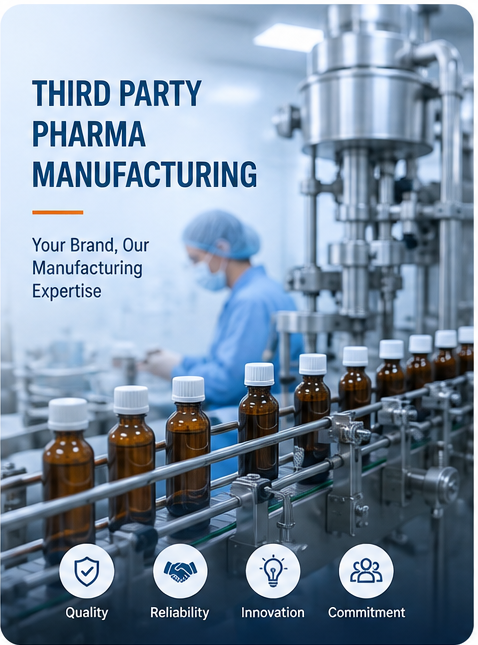
Third party pharma manufacturing is a business arrangement where a pharmaceutical company manufactures products for another business.
The business partner can then market the products under its own brand or according to the agreed business arrangement.
This model can be useful for businesses that want to expand their pharmaceutical product portfolio without managing the entire manufacturing setup themselves.
Benefits of Third Party Manufacturing
1. Expand Your Product Portfolio
Third party manufacturing can help businesses introduce additional pharmaceutical products into their portfolio.
Depending on the manufacturing capabilities and applicable requirements, businesses may explore categories such as:
- Tablets
- Capsules
- Syrups
- Dry syrups
- Softgels
- Injectables
- Healthcare products
2. Manufacturing Support
Working with an experienced manufacturing partner can simplify coordination related to product requirements and production.
The manufacturing partner can coordinate the applicable manufacturing process according to the agreed specifications.
3. Business Flexibility
Third party manufacturing provides businesses with an opportunity to explore different product categories according to their market requirements.
How Does the Process Work?
A typical third party manufacturing process may involve the following steps:
Step 1 – Share Your Requirement
The business shares information about the required products and specifications.
Step 2 – Product Discussion
The manufacturing team discusses product availability and applicable requirements.
Step 3 – Finalize Requirements
Product specifications and other relevant requirements are finalized.
Step 4 – Manufacturing
The manufacturing process proceeds according to the finalized arrangement.
Step 5 – Quality Checks
Applicable quality checks are carried out during the manufacturing process.
Step 6 – Product Delivery
The finished products are coordinated for delivery according to the agreed arrangement.
How to Select a Manufacturing Partner?
Before selecting a manufacturing company, consider:
- Product portfolio
- Manufacturing capabilities
- Quality processes
- Communication
- Product requirements
- Business support
- Long-term partnership approach